

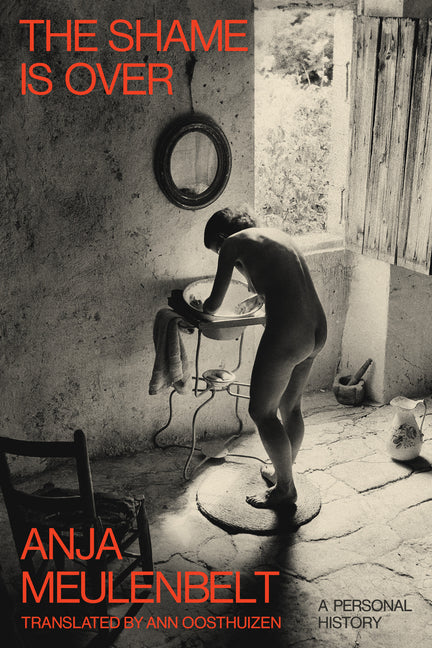
The Shame Is Over: A Personal History
Regular price
$22.00 USD
Sale price
$22.00 USD
Regular price
$22.00 USD
Book Details
- ISBN
- 9781662603723
- Binding
- Paperback
- Authors
- Anja Meulenbelt
- Other Contributors
- Ann Oostheizen
- Publisher
- Astra House
- Published Date
- August 25, 2026
- Language
- English
- Pages
- 320
"An intimate look at a woman's struggle to redefine her life . . . Meulenbelt's revelations, like Annie Ernaux's The Years, bear witness to decades of profound change, when women came to see their lives 'on the boundary between the personal and the political.' A candid chronicle of awakening." --Kirkus Reviews For fans of Tove Ditlevsen, Alba De Cespedes and Annie Ernaux, The Shame Is Over is a cult classic of feminist literature; Anja's struggle for liberation and equality still resonates loud and clear today, fifty years after the book's first publication. Anja's teenage life is troubled by her marriage to Toni, an Austrian man she met on holidays with her parents, and with whom she has a son, Armin. At nineteen, seeking freedom from abuse and rejecting traditional domestic roles, she leaves her marriage and begins the fight for her own path. Her next decade is shaped by the sexual liberation of the 1970s, as she discovers herself through a series of increasingly dramatic relationships with men, married men, and women all over Europe, all alongside the challenges of single motherhood, and an ever-deepening commitment to feminist and political causes. As her emotional and political consciousness grow, Meulenbelt finds both purpose and community in activism - and begins to redesign what it means to live as an autonomous woman. First published in 1976, THE SHAME IS OVER blends a raw account of Meulenbelt's evolution as a mother, lover and political thinker with an incisive portrayal of the struggles women face in their pursuit of autonomy and equality. Meulenbelt doesn't shy away from the internal tensions of the feminist movement - its contradictions, divisions, and emotional costs. In a haunting final passage, she imagines a dialogue with her younger, insecure self, offering a powerful metaphor for the liberation she seeks not only for herself, but for all women.
EXPECTED DELIVERY
24 Jul
— Usually ships in 2-3 days.
Couldn't load pickup availability
Share

The Shame Is Over: A Personal History
Regular price
$22.00 USD
Sale price
$22.00 USD
Regular price
$22.00 USD